Systems Architecture · Applied AI · Web Platform
AmazingOS: One Platform, Multiple Products
AmazingOS
- 2025-Present
- In Development
- Self-initiated
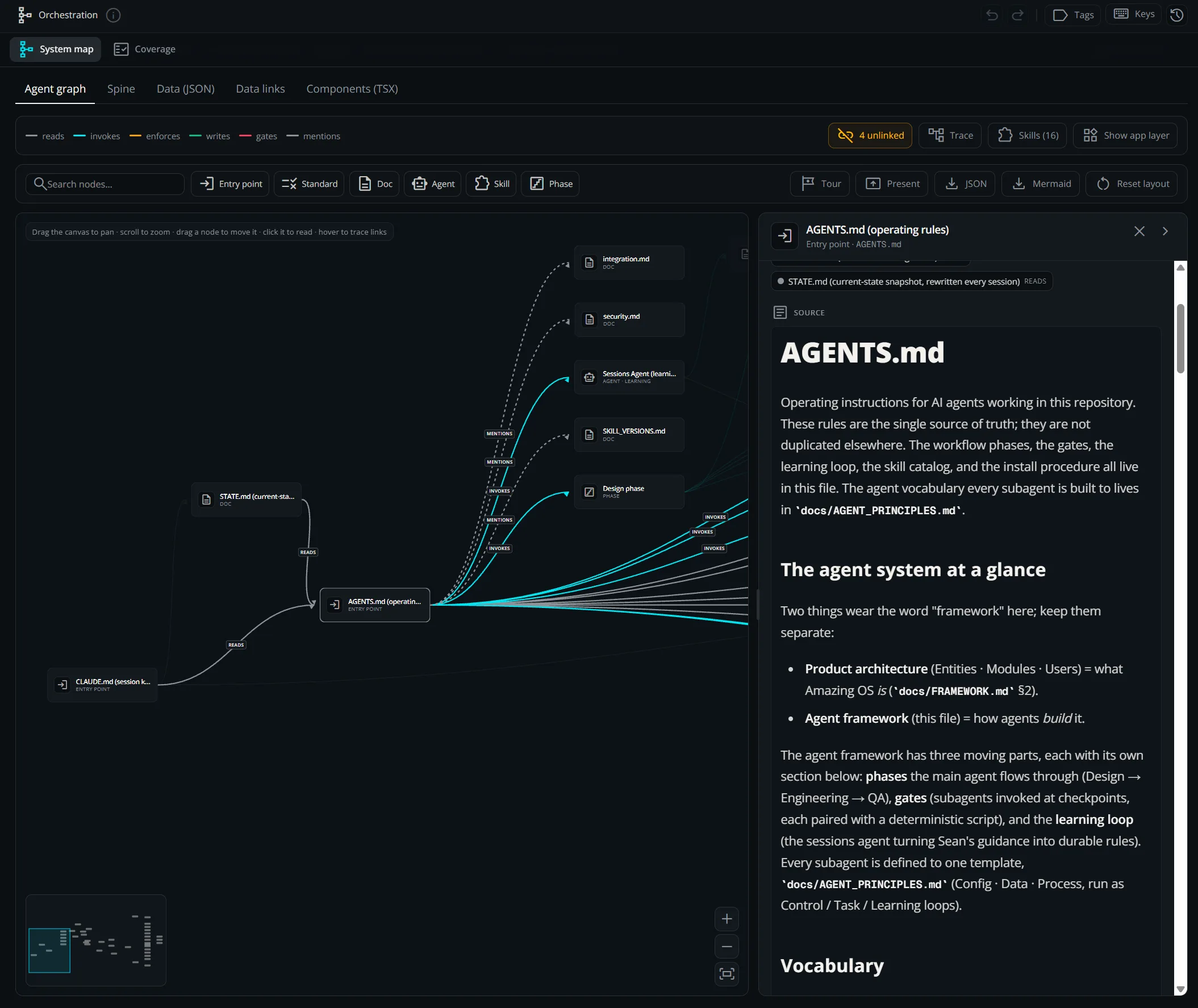
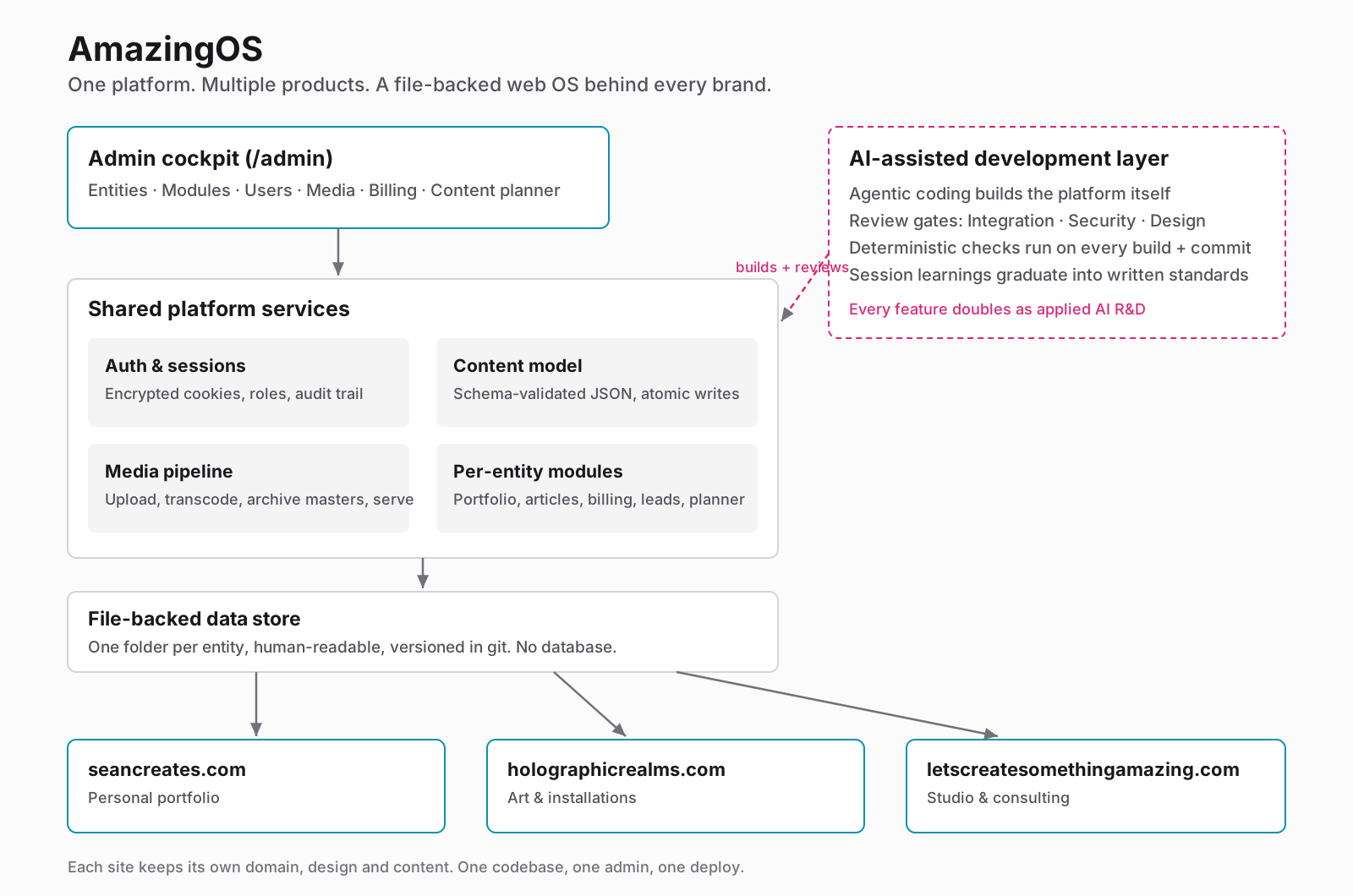
AmazingOS is the shared platform behind my personal, art and business brands: one backend connecting multiple public sites, their users, content systems and development tooling. It is also the working test bed for my AI-assisted development practice. Agent workflows, review gates and orchestration are part of how the platform builds itself.
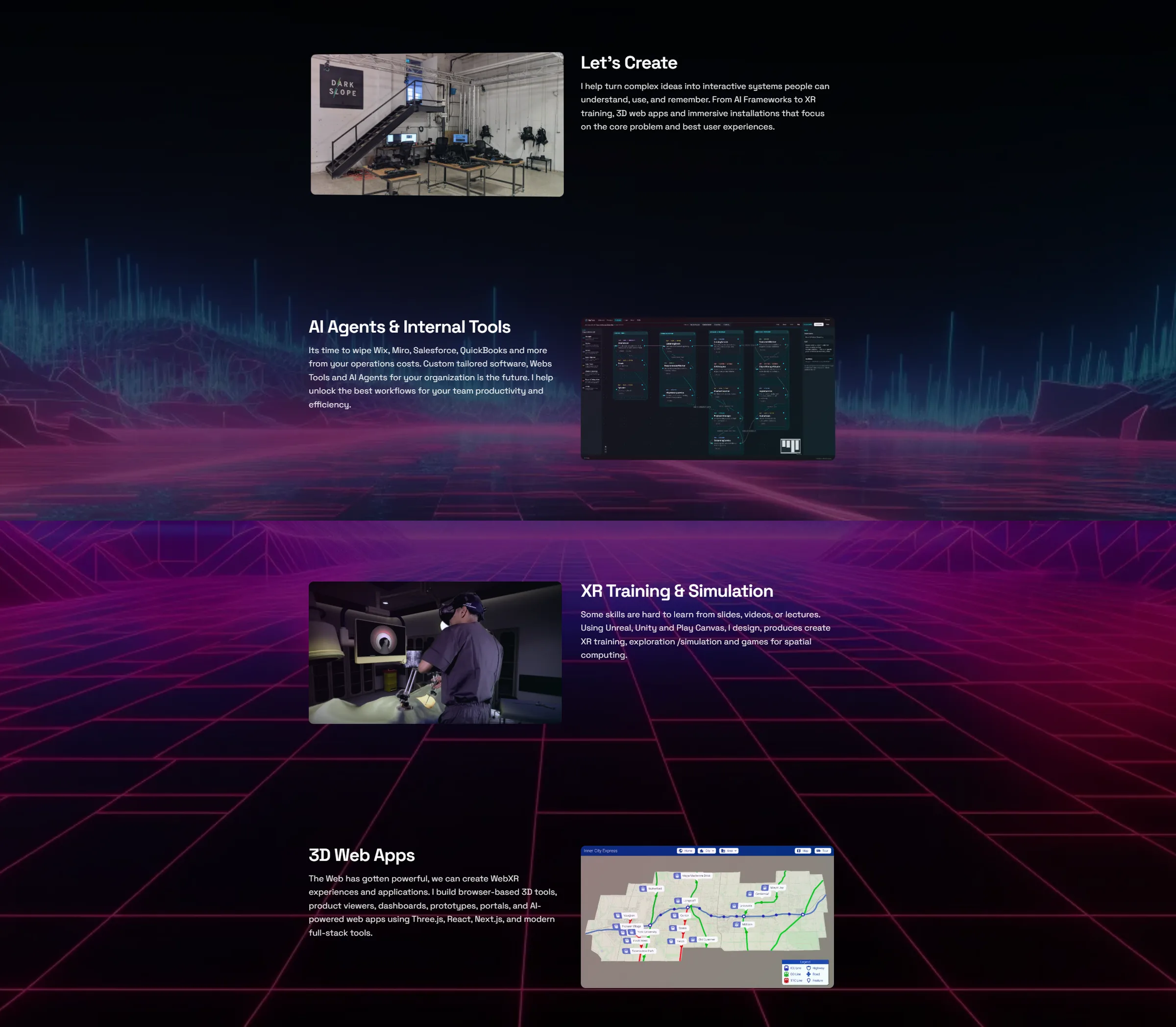
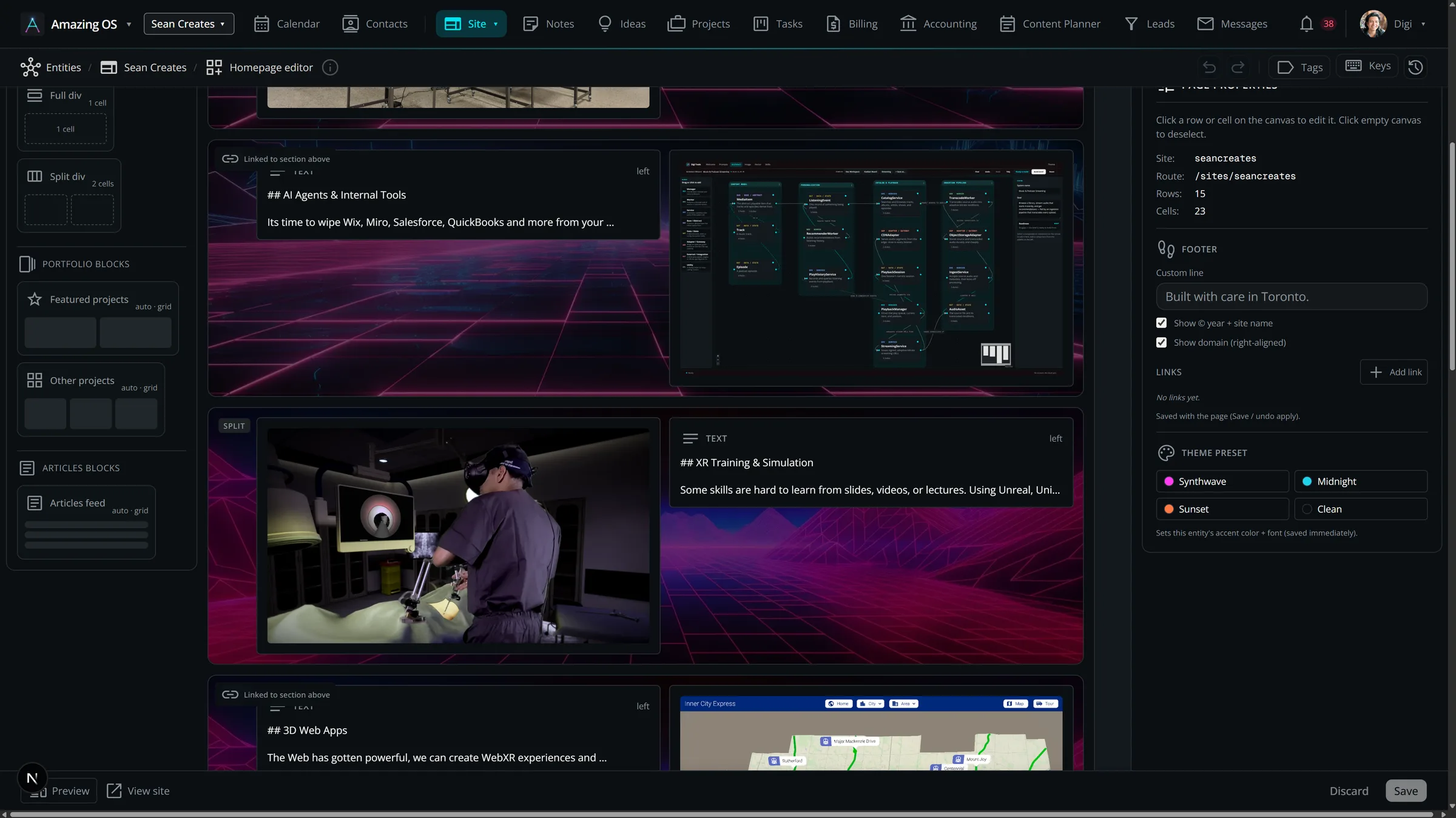
- Three live production sites served from one codebase, one admin and one deploy
- A working agentic development pipeline: AI review gates run before every delivery
- Zero-database architecture: schema-validated JSON with atomic writes and full git history
Challenge
Running several brands and sites normally means duplicating everything: authentication, content models, administration, deployment logic and tooling, once per site. Every duplicate is another thing to maintain and another place for versions to drift apart.
Solution
One shared architecture. Reusable services handle authentication, content and user management, media pipelines and per-entity modules, while every public site renders from the same file-backed data layer with its own domain, design and content. A common development layer wraps the whole thing: AI agents run integration, security and design review gates before changes ship, deterministic checks enforce the written standards on every build, and the same orchestration handles multi-site deployment.
Outcome
Runs my public sites (seancreates.com, holographicrealms.com, letscreatesomethingamazing.com) from one codebase and one admin, with content, media and business records managed per brand. The platform is also where my agentic development workflow lives, so every feature doubles as applied AI R&D.
Gallery
More
Contributions
- System architecture and platform design: entities, modules and users as the core model
- Shared backend and schema-validated, file-backed content model with atomic writes
- Multi-site, multi-brand tooling: custom domains, per-entity media pipelines and business modules
- AI-assisted development workflows with agentic review gates for integration, security and design
- Reusable automation: deterministic checks, orchestration maps and session-to-standards learning loops
- Product and UX architecture across the admin cockpit and every public site
- Ongoing iteration and deployment across live production domains